Clean Cosmetics and Microbiological Testing: Essentials for Formulators
Understanding the vital role of microbiological testing for cosmetics in the UK for compliance with regulatory requirements.
By Sally Bellekom, Managing Director, and Laura Daley, Operations Manager & Technical Lead at Southern Microbiological Services – a Tentamus Company (UKAS accredited testing laboratory No. 1922)
Cosmetics and personal care items, such as shampoos, conditioners and skincare products, play a substantial role in our daily lives. Cosmetic items are frequently purchased to fulfil a beauty need – reducing fine-lines or wrinkles, taming frizz or giving sun protection – however there is also another lesser-appreciated aspect: small, luxury cosmetic items can be indicative of the wider geopolitical and geoeconomic climate. This is known as the ‘lipstick’ effect. During times of economic hardship, more importance is often given to small, high-end purchases, such as lipsticks or cosmetic items, as a ‘feel good factor’. These essential personal care items and cosmetics are tightly regulated in the UK to ensure consumer safety and maintain product quality. Regulations prevent the inclusion of harmful ingredients and essential testing, such as microbiological testing, ensures products are safe for use.
This short piece will outline how Southern Microbiological Services – a Tentamus Company, works with clients to ensure that microbiological contamination within cosmetic items falls within the strict parameters defined in UK law. We’ll also cover why, when working with products specifically designed for ‘clean beauty’, ensuring raw materials are high quality and microbe-free is particularly important, as well as considering natural alternatives to commonly-used synthetic antimicrobial additives.
Microbiological Testing 101: What is it, and why is it necessary?
The inclusion of antimicrobial agents, also referred to as preservatives, to cosmetic items is essential to control the growth of bacteria, yeasts and fungi (mould). As well as being an essential aspect of consumer health protection, the addition of these preservatives also extends the shelf-life of cosmetics – both during storage and use – and helps to maintain product stability and quality.
Microbiological testing is an essential part of cosmetic item testing, feeding into the Cosmetic Product Safety Report (CPSR), which is part of the Product Information File (PIF) - a mandatory, legally required document that certifies a product is safe for human health and complies with Cosmetic Regulations 1223/2009. The PIF must be kept for 10 years after the last batch of product was prepared.
The take home?
Microbiological testing isn’t a ‘nice to have’, it’s a legal requirement in the UK and EU.
Sub-categories of microbiological testing
Within microbiological testing there are two different types of test:
- Microbiological testing is general catch-all term for testing to check whether a product, or an ingredient, meets required microbiological specifications and quality prior to its release to the consumer.
- Challenge testing (also called a Preservative Efficacy Test, or PET) is a specific type of microbiological test used to assess the performance of the preservative system in the final product. It involves deliberately introducing microorganisms into the product under controlled conditions and monitoring the outcome.
Challenge Testing (or PET) Procedure
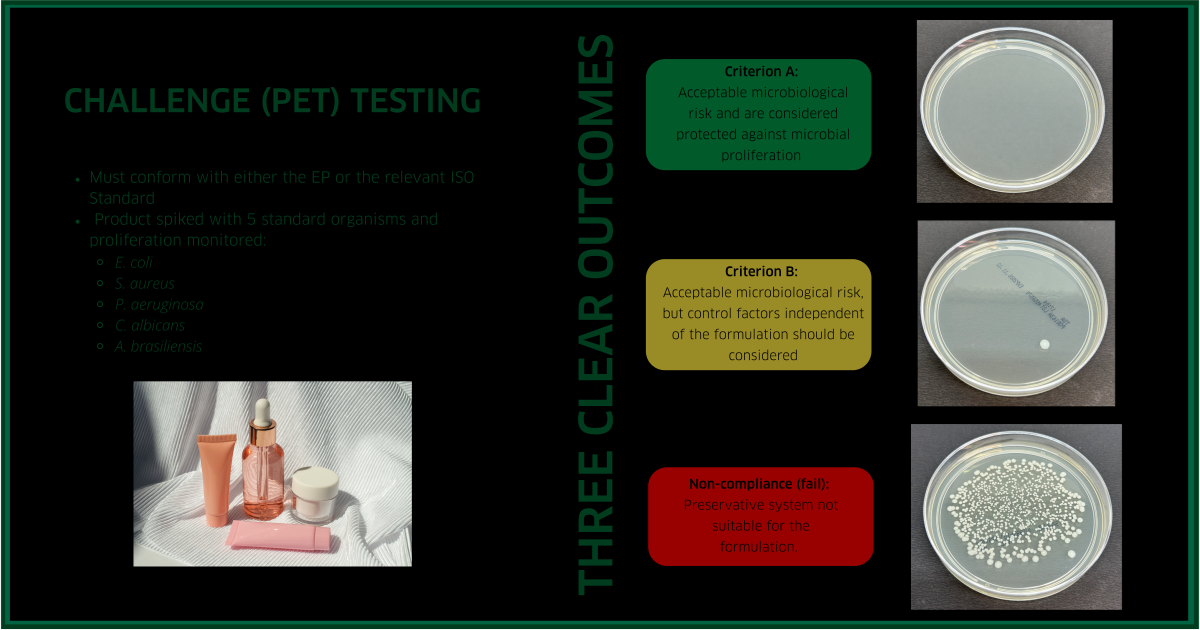
Challenge testing (or PET) in the UK should conform to either the European Pharmacopoeia or the relevant ISO Standard, depending upon the final market for the product. In this test, five standard organisms – Escherichia coli, Staphylococcus aureus, Pseudomonas aeruginosa (bacteria) Candida albicans (yeast) and Aspergillus brasiliensis (mould) – are added to a product, and their growth assessed over a 28-day period. During analysis of challenge test data, key factors are taken into consideration including packaging, intended usage, and storage instructions. Challenge testing data are subsequently analysed, and products categorised into acceptability criteria: criterion A, criterion B or non-compliance (fail).
- Criterion A: products have acceptable microbiological risk and are considered protected against microbial proliferation. Any factors independent of the formulation do not need consideration.
- Criterion B: products have acceptable microbiological risk, but control factors independent of the formulation should be considered, for example packaging to prevent contamination through use.
- Non-compliance (fail): tested preservative system is not suitable for the formulation.
Microbiological Testing: Ingredients
Recently, the popularity of so called ‘kitchen chemistry’ has grown, fuelling a huge expansion in development of home-made cosmetic items. Much of this has been driven by the desire for ‘clean beauty’, where ingredients are ‘raw’ or ‘natural’ and, as much as possible, avoid using synthetic preservatives. Regardless of where the material is being produced – either made by a small, artisanal supplier, or manufactured by a larger multinational corporation – consideration of microbiological testing at all stages is a must.
Raw materials
Raw materials must be tested to ensure quality and compliance, and to avoid costly contamination of a large batch. Whether testing prior to in-house formulation, or testing before supplying another manufacturer, microbiological testing of raw ingredients is a core aspect of quality control. Testing is also vital for consumer safety and maintaining brand trust. This is especially true for raw ingredients with a high water content, such as water-based emulsions, peptides or proteins, and is key for ingredients of natural origin: most microorganisms thrive in aqueous environments.
During formulation
As well as microbiological testing of raw materials, challenge testing can also be used during formulation to determine minimum quantities of preservative required, although this is not an absolute requirement for regulatory bodies. This can be a valuable tool, giving confidence both in raw materials and in the production processes, including hygiene standards during manufacture.
The final product
Challenge testing for final products is vital to ensure regulatory compliance and user safety as well as ensuring the preservative system is robust. Even with an effective preservative formulation, overall antimicrobial performance of a product is influenced by several factors, particularly water content (as noted earlier) and method of use. For example, cosmetic creams in jars must withstand fingers being inserted daily, sometimes without washing, presenting a significant risk of microbial contamination. Other items, such as shampoos and shower gels, may reside in a warm and humid environment, also increasing the risk of microbial contamination and growth. In such cases, the preservative system working effectively in conjunction with its packaging is crucial for product success.
Microbiological Testing: Preservatives
Regardless of the type of cosmetic item prepared, the addition of preservatives is a necessary and legal requirement, if your formula supports microbial growth. A preservative may be selected from two broad classes; synthetic preservatives and natural preservatives. The product USP may significantly influence this decision.
Synthetic preservatives
Synthetic preservatives are the stalwarts of the industry, having been used across products and formulations for decades. Many are derived from crude oil and are manufactured in large quantities, making them a cost-effective option. Common synthetic preservatives include Phenoxyethanol (1), Sodium Benzoate (2), Methylparaben (3), Benzyl Alcohol (4), Caprylyl Glycol (5), Ethylhexylglycerin (6), and Potassium Sorbate (7), Figure 1.
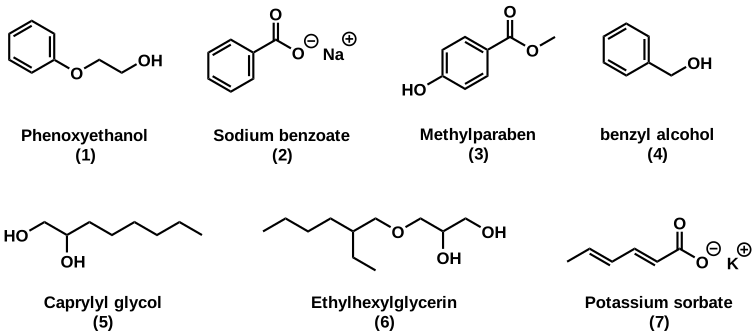
Figure 1: Chemical structures of some commonly-used preservatives in cosmetic items.
Not all preservatives have the same antimicrobial activity. For example, parabens, such as Methylparaben (3), are effective against bacteria and moulds, but have limited activity against yeasts, whereas Phenoxyethanol (1) has a broader range of activity, effective against bacteria, yeasts and moulds. In some instances, to ensure broader preservative efficacy, a combination of preservatives is used. Due to their high efficacy, the quantity of synthetic preservative required for cosmetic products is low, typically lower than 2% weight for weight (w/w) of the final formulation.
Natural preservatives
More recently, there has been a shift towards the use of natural preservatives rather than their synthetic cousins. As their name suggests, these are often derived from natural sources and include materials such as rosemary oil, tea tree oil and grapefruit seed extract. In many cases the natural oil is not a single chemical entity, rather a combination which elicits antimicrobial activity. It is worth noting that in some products, in order to achieve the required antimicrobial effect, these natural oils need to be used in conjunction with a synthetic preservative.
Microbiological testing: a non-negotiable element
Microbiological testing is not a ‘nice to have’, it’s a legal requirement for all cosmetic items sold in the UK and EU. Insufficient or negligent microbiological testing – of both raw materials and the final formulation – can have severe consequences, ranging from loss of trust and brand damage through to serious health risks for consumers, including skin and eye infections, allergic reactions and even systemic infections.
At Southern Microbiological Services – a Tentamus Company (UKAS accredited testing laboratory No. 1922), we work with our clients to ensure that all testing follows rigorous standards and complies with the UKAS requirements. Our tests are based on ISO standards and, when necessary, the European Pharmacopoeia – 5.1.3 Efficacy of Antimicrobial Preservation.
For more information about our cosmetic services, contact us here!
Frequently Asked Questions
I’m formulating a product that’s designed to be ‘clean’, do I need to undertake microbiological testing?
Yes. Regardless of a product’s USP, it is a legal requirement in the UK and EU for all products to comply with Cosmetic Regulations 1223/2009.
For microbiological testing, do I only need to test the final product?
Technically, that is true and is the minimum requirement for registration of a product as a cosmetic in the UK and EU. However, it’s best practice to undertake microbiological testing at regular intervals within the development and manufacture of cosmetic items, for example the raw materials, during the manufacturing process, and for the final product. This provides confidence across production processes, as well as facilitating monitoring of hygiene standards during manufacture.
I am new to the field of cosmetics. Can you give me help and guidance for microbiological testing regimens?
Absolutely. At Southern Microbiological Services – A Tentamus Company, we pride ourselves on our quality of service, as well as bringing our experience to support our clients effectively. Contact us today and we can arrange a discovery call to discuss your product’s needs and advise on the correct testing required, ensuring adherence to local regulations.
References
[1] Cosmetic Testing FAQ – Everything You’ve Always Wanted To Know About Cosmetic Testing. Southern Microbiological Services – A Tentamus Company. https://www.smslab.co.uk/news/cosmetic-testing-faq-everything-youve-always-wanted-to-know-about-cosmetic-testing/ (Accessed April 2026)
[2] Regulation (EC) No 1223/2009 of the European Parliament and of the Council. UK Government. https://www.legislation.gov.uk/eur/2009/1223/contents (Accessed April 2026)
[3] Schedule of Accreditation issued by United Kingdom Accreditation Service. Southern Microbiological Services – A Tentamus Company. https://www.ukas.com/wp-content/uploads/schedule_uploads/00002/1922Testing-Single.pdf (Accessed April 2026)